Hanna Zamazeeva: “The best path to strengthening energy resilience and energy independence is building decentralized networks with a significant share of renewable energy sources, decarbonization, and improved energy efficiency across all sectors.”
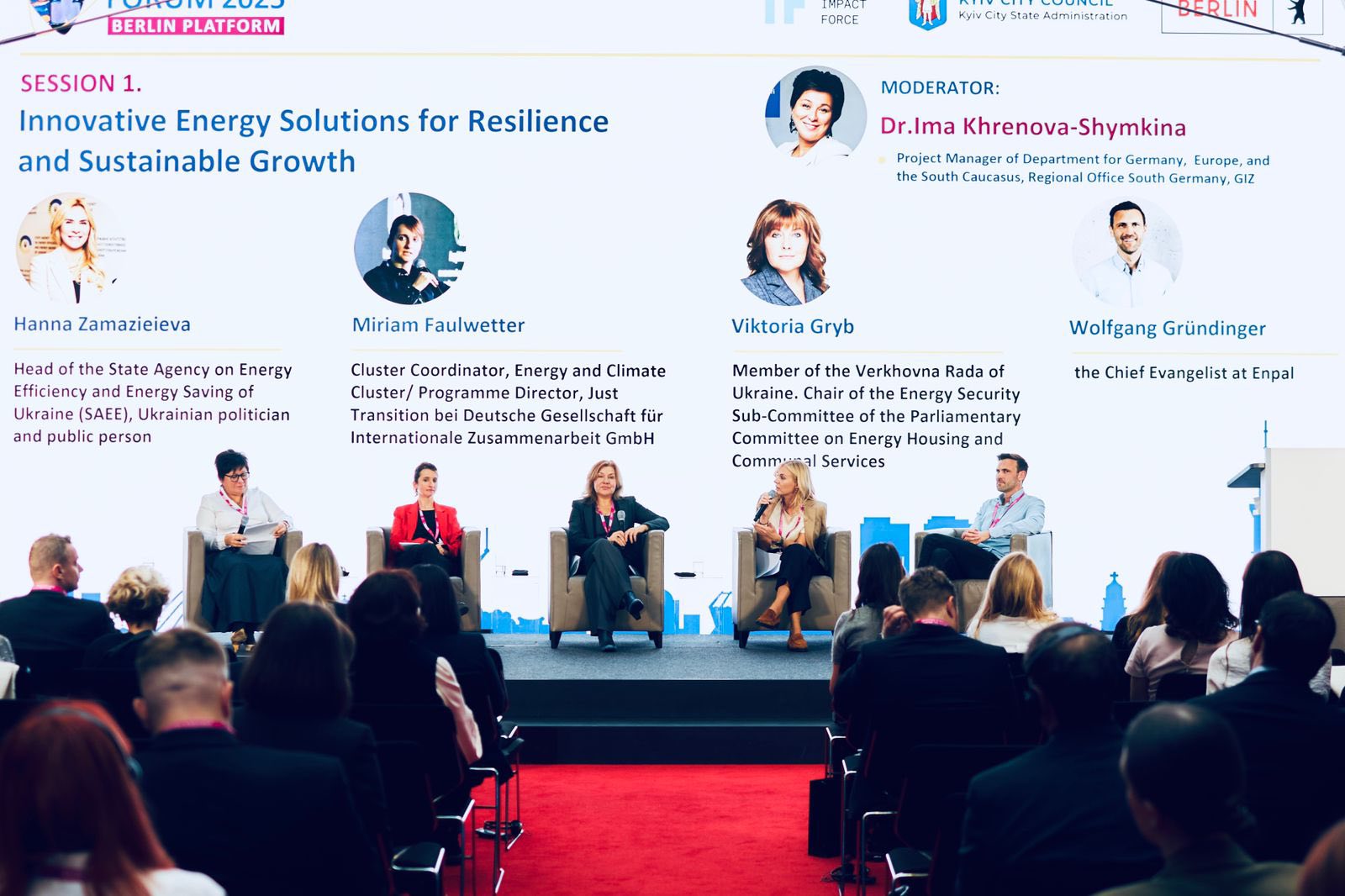
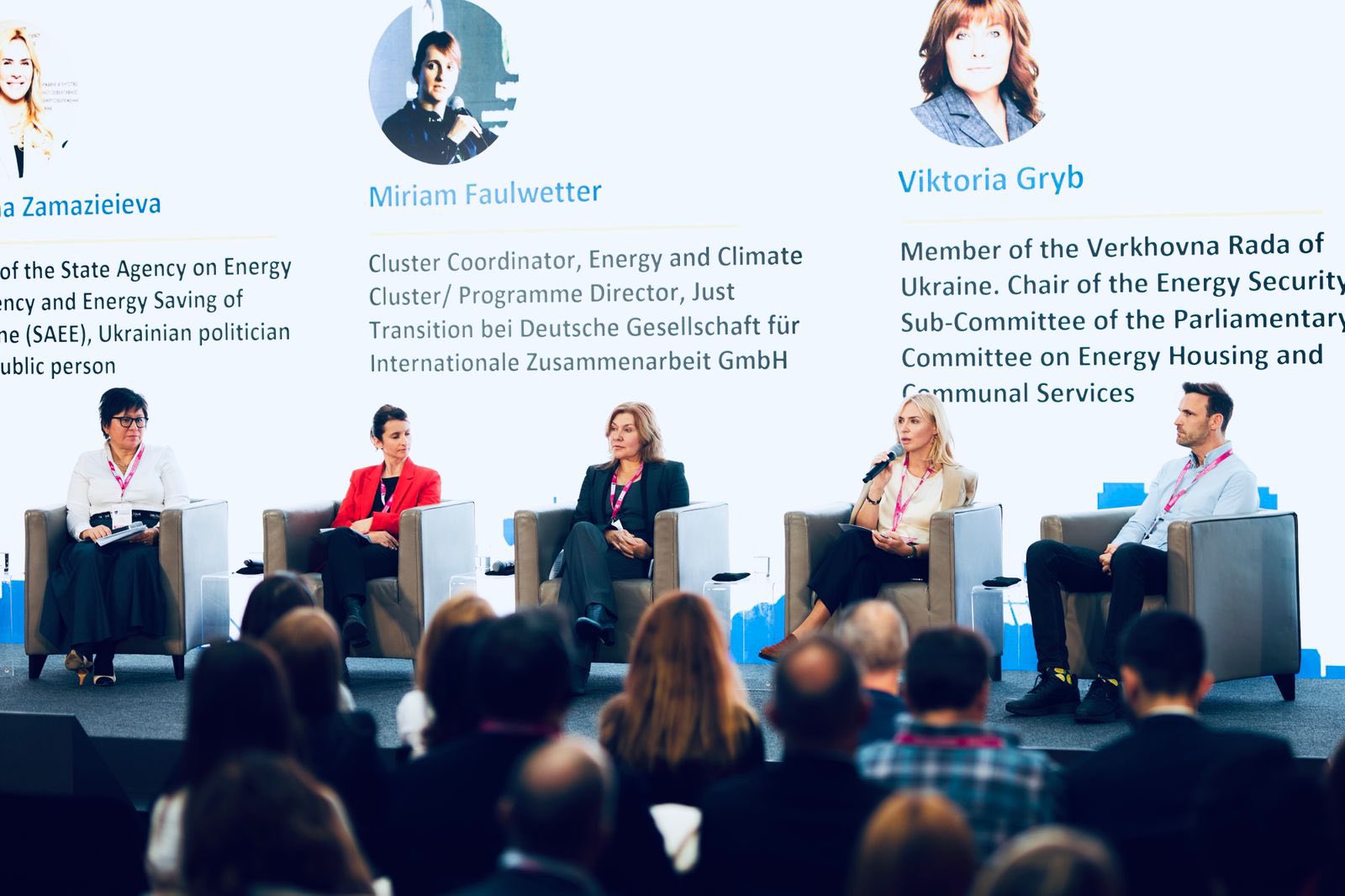
This was the key message emphasized by the Head of the State Agency on Energy Efficiency during the large-scale Kyiv Investment Forum in Berlin, which brought together EU Commissioners, representatives of international financial institutions, government officials, and experts from EU countries.
The central theme was building a shared future for Ukraine and Europe during challenging times. The war waged by Russia against Ukraine and systematic attacks on critical infrastructure have exposed the fragility of traditional centralized energy models. Recent years have shown that the old energy architecture cannot guarantee stability and uninterrupted operation during crises.
“We have clear national priorities in the fields of decarbonization and energy efficiency, fully aligned with the principles of the European Union’s Green Transition and its energy standards,” noted Hanna Zamazeeva during her speech.
To accelerate development at the local level, the State Agency on Energy Efficiency focuses its work on three strategically important areas: finance, technology, and human capital.
Today, one of the most effective mechanisms supporting energy-efficient solutions is the Ukraine Decarbonization Fund. In just its first year of operation, it has financed 62 projects across various regions, with a total value of 1.035 billion UAH.
The result is a noticeable reduction in electricity consumption in water utilities, hospitals, shopping centers, and food industry enterprises.
In addition, a model for attracting international grants and preferential loans has already been developed, which will allow programs to be scaled up and will accelerate the modernization of local energy systems.
“We are promoting the implementation of solutions that have already proven effective in Europe and worldwide, adapting them to local needs. For example, local energy networks with solar power plants, energy storage systems, and digital management tools — ensuring stable energy supply even during emergencies or attacks,” emphasized the Head of the Agency.
This refers to the creation of local energy microgrids equipped with solar plants, energy storage systems, and digital management platforms capable of maintaining stable power supply even in crisis conditions.
Due to the war, many regions face an acute shortage of qualified specialists. Ukrainian engineers and energy managers need modern knowledge and practical tools. That is why the State Agency on Energy Efficiency, together with international partners, systematically organizes practical training, seminars, and regional workshops that help professionals confidently implement innovative technologies.
“During the panel discussion, I invited everyone to join, support, and cooperate — only through joint efforts can we build a safe and stable future for Ukrainian communities and for Ukraine within the greater European family. I am grateful to all international partners for their unwavering support, especially in the most challenging times,” concluded Hanna Zamazeeva.